
Insights


The CRDMO Effect: Why the Leaders the Industry Needs Don't Exist Yet
The global pharma services market is undergoing one of the most significant structural shifts in a generation and the talent implications have barely been discussed.
The CRDMO market is projected to grow from $143.8 billion in 2025 to $386.7 billion by 2035. A near tripling in value driven not just by outsourcing demand, but by a fundamental reimagining of how drug development gets done. The traditional model, where a sponsor would engage a CRO for research, hand the molecule to a CDMO for development, and then pass it again to a CMO for manufacturing, is quietly becoming obsolete. In its place is rising the CRDMO: a single integrated partner that follows the molecule all the way from discovery to commercial production.
This isn't a future concept. It's happening now, at pace, and at scale. And if you're leading an organisation in pharma services, whether as a CEO, a Chief People Officer, or a Business Development Director. The question you should be asking isn't what is a CRDMO? It's who leads one?

A New Model Demands a New Kind of Leader
The commercial logic of the CRDMO is straightforward. When working with different vendors for every stage of drug development, companies must constantly transfer technology and disseminate knowledge between teams, risking communication breakdowns and project delays. An integrated model eliminates those handoffs. With strong synergy across multiple business units, the integrated research platform ensures seamless project transitions from upstream to downstream, reducing the risks associated with drug project transitions, speeding up progress, and lowering costs.
But here's the organisational challenge that rarely gets discussed: collapsing the CRO-to-CDMO handoff doesn't just change the service offering. It fundamentally changes what leadership looks like across the entire organisation.
The traditional senior leader in pharma services sat firmly in one domain. A VP of Clinical Operations came up through CRO environments. A Head of Process Development came up through manufacturing. Their expertise was vertical. Their networks were silo-specific. Their instincts were shaped by the norms of their function.
The CRDMO demands something different: executives who can operate fluidly across the full development and manufacturing continuum. Experts who understand the science of early discovery, the regulatory rigour of clinical development, and the operational complexity of commercial-scale manufacturing. That person is extraordinarily rare. And the market is only just beginning to realise it.
The M&A Pressure Cooker
The urgency of this challenge is being accelerated by the wave of consolidation reshaping the sector. Novo Holdings' $16.5 billion acquisition of Catalent, completed in December 2024, was described as a "defining moment" for the CDMO sector. Deals of this scale shift market share and create immediate, acute leadership challenges.
When a CRO and a CDMO are brought together through acquisition or merger, the cultural and capability clash is significant. Two organisations that have historically operated with different rhythms, different quality frameworks, different client relationships and different definitions of success are suddenly expected to function as one. The integration leader (i.e. whoever is tasked with making the CRDMO model actually work in practice) needs to hold an almost unique combination of scientific credibility, operational authority and change management capability.
That profile is not a job description that has traditionally existed in pharma services and organisations are discovering this the hard way.
Geopolitics Is Writing the Job Spec
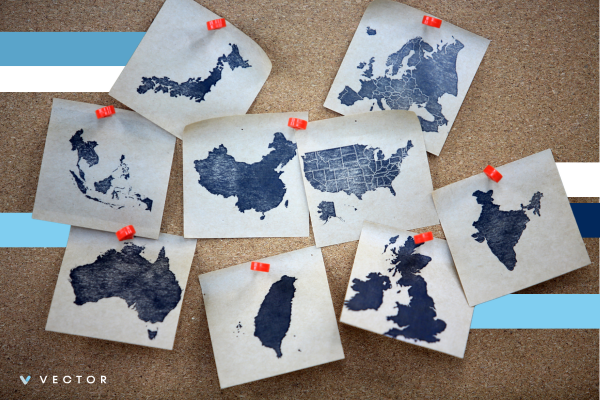
Layered on top of the structural shift is a geopolitical one. The BIOSECURE Act, which moved into law at the end of 2024, is accelerating the decoupling of Western pharma supply chains from Chinese service providers. A desire to de-risk supply chains has made India a preferred outsourcing destination, with global supply chain realignments unlocking a $10 billion opportunity for Indian CRDMOs as Western pharma companies look for alternative hubs.
What this means practically is that CRDMOs are scaling rapidly in geographies like India, the UK, and continental Europe, that haven't historically had the senior talent infrastructure to match. A BCG-IPSO report estimates that the CRDMO workforce in India alone must scale six to seven times by 2035, in both quantity and quality. That's a structural talent crisis developing in slow motion and one that organisations need to be planning for now, not in three years' time.
What Does the CRDMO Executive Actually Look Like?
At Vector, we're increasingly being asked to find leaders for roles that sit awkwardly across the traditional CRO and CDMO divide. Based on what we're seeing in the market, the senior profiles that CRDMOs will compete hardest for over the next three to five years share a few defining characteristics:
- Cross-continuum fluency: They have genuine credibility in both research and manufacturing environments not just a working knowledge of one, with exposure to the other.
- Integration experience: They've navigated M&A or large-scale organisational transformation, ideally in a regulated environment where the stakes of getting it wrong are high.
- Commercial and scientific bilingualism: They can hold a conversation with a sponsor's CMO about portfolio strategy and a conversation with a process development scientist about tech transfer and be taken seriously in both rooms.
- Geopolitical awareness: As supply chains restructure, the ability to think and operate across multiple regulatory environments is becoming a baseline expectation, not a differentiator.
The organisations that start building for this profile today, whether through targeted recruitment, deliberate succession planning or strategic leadership development, will be significantly better placed than those that wait for the model to fully mature before they act.
The Window Is Open. But Not For Long.
The CRDMO is not a niche experiment. In 2025, large pharmaceutical companies were estimated to hold 43.8% of the CRDMO market share, a signal that this is now mainstream outsourcing strategy at the highest level of the industry. As that demand accelerates, the competition for the small pool of leaders equipped to run these integrated organisations will intensify rapidly.
The organisations that treat leadership capability as an afterthought to commercial strategy will find themselves with state-of-the-art infrastructure and no one able to lead it effectively.
At Vector, we position ourselves as the bridge between pharma services and executive talent and we're tracking this shift closely. If you're thinking about how your leadership architecture needs to evolve as the CRDMO model takes hold, we'd welcome the conversation.
Newsletter
Subscribe to our LinkedIn newsletter and receive our latest insights on talent and the pharma services industry

