

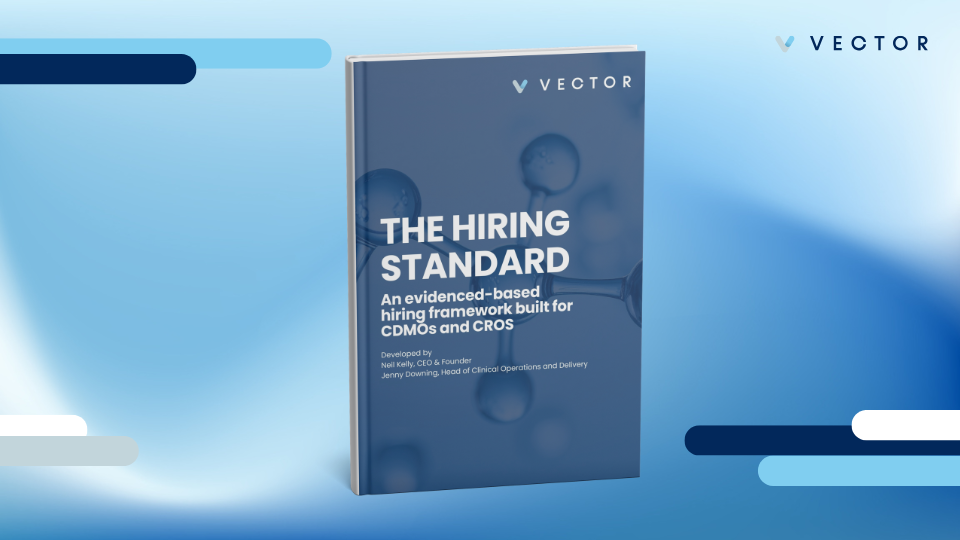
The Hiring Standard examines how leadership selection shapes execution stability in regulated outsourcing environments. Across eight chapters, we explore how decision quality determines whether organisations absorb volatility or amplify it. This archive provides access to all released chapters.
Chapter Index
Part 1: Execution Is the Product
Why execution stability is a leadership outcome, and why hiring decisions are structural risk decisions.
Part 2: Why Smart Leaders Still Mis-Hire
How instinct, chemistry and consensus distort decision quality.
Part 3: Precision vs Scale Risk
The difference between concentrated leadership exposure and systemic hiring volatility.
Part 4: The Evidence-Based Hiring Operating Model
What a structured, predictive hiring system looks like in regulated environments and how to replace conversational interviews with disciplined evaluation.
Part 5: Quality of Hire as a Leading Indicator
Why time-to-fill is the wrong metric and how quality-of-hire predicts execution stability, sponsor confidence, and commercial durability.
Part 6: The Hiring Standard Playbook
The practical framework: outcome contracts, failure-mode mapping, scenario simulation, independent calibration, and defensible decision-making.
Part 7: Predictability as Competitive Advantage
Why the next phase of CDMO and CRO competition will be defined not by capability, but by execution stability and how hiring architecture drives valuation.
Part 8: From Argument To Architecture
How to embed hiring discipline as operating model infrastructure protecting keystone roles, scaling without erosion, and reducing leadership volatility over time.
Execution stability does not happen by accident.
It is engineered through leadership behaviour. Leadership behaviour is shaped by hiring discipline.
If you would like to pressure-test your current hiring architecture against the risks outlined in this series, we are happy to share the evaluation model and calibration framework used with CDMOs and CROs.
Newsletter
Subscribe to our LinkedIn newsletter and receive our latest insights on talent and the pharma services industry

